Cross enough time zones and your body clock ends up hours behind local time, leaving you wide awake at 3am and yawning by lunchtime. The good news? Learning how to beat jet lag mostly comes down to a few well-timed changes, with a licensed treatment such as Melatonin if you need extra help.
This guide covers what to do before you fly, on the plane and once you land. It also explains how long jet lag lasts, why the trip home can feel harder than the trip out, and whether coffee and alcohol make things worse.
Jet lag is temporary, and most of what helps costs nothing. It's mainly about timing your sleep, daylight and meals to where you're going, not where you've been.
What causes jet lag?
Your body runs on an internal clock called the circadian rhythm. It's a roughly 24-hour cycle that tells you when to sleep, wake and feel alert.
Daylight is the main signal that keeps this clock in time. Melatonin, a hormone your brain releases after dark, helps too.1
Fly across several time zones in one go and your body clock can't keep up. It's still on home time while the clock on the wall says something else. That mismatch is jet lag.2
Doctors define jet lag disorder as sleep problems after crossing at least two time zones.3 The more zones you cross, the bigger the gap your body has to close.
It's the time difference that causes jet lag, not the hours in the air. A long flight within a similar time zone won't throw your body clock out.
What are the symptoms of jet lag?
Jet lag symptoms usually kick in within a day or two of arriving.3 The NHS lists these as the main ones.2
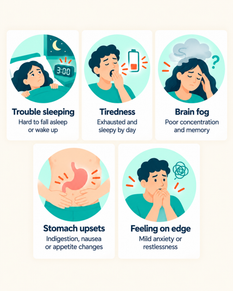
- Trouble sleeping - struggling to drop off at bedtime or to wake up in the morning, and sleeping badly when you do.
- Tiredness - feeling exhausted and finding it hard to stay awake during the day.
- Brain fog - problems with concentration and memory.
- Stomach upsets - indigestion, nausea or constipation, or changes in your appetite.
- Feeling on edge - some people notice mild anxiety.
Headaches are common too.1 Not drinking enough on a long flight can make physical symptoms like these feel worse.3
How long does jet lag last?
For most people, jet lag improves within a few days.2 How long yours lasts depends mainly on how many time zones you've crossed and which direction you flew.
On average, your body clock shifts by about an hour a day after flying east, and about an hour and a half a day after flying west.3 Here's how that works out on some common routes:
- USA to UK (5 hours east from New York) - around five days to fully adjust.
- UK to USA (5 hours west) - around three to four days.
- Australia to UK (9 to 11 hours west from Sydney, depending on the time of year) - around a week.
Your genes, any medicines you take and how much daylight you get once you land all play a part too.3
Use the hour-a-day rule to plan ahead. If something important falls in the first few days of your trip, give your body clock as much of a head start as you can.
How to beat jet lag, step by step
You can't completely prevent jet lag.2 But you can shorten it. The trick is to start moving your body towards destination time before you even reach the airport.
Before you fly
Get plenty of rest in the days before you travel.2 Then nudge your sleep towards your destination. For 2 to 3 days before you go, move your bedtime and wake-up time by an hour a day: earlier if you're flying east, later if you're flying west.3
Got a choice of flights? Pick one that lands when you can get daylight at the right time.3
During the flight
Time your sleep, meals and light around destination time from the moment you board.3 In practice, that means:
- Try to sleep if it's night time where you're going. An eye mask and earplugs can help.
- Drink plenty of water.
- Get up, stretch and walk around the cabin regularly.
- Go easy on caffeine and alcohol, as both can make jet lag worse.2
Changing planes? The same rules apply on a layover, so use the break to stretch your legs.
Moving around matters for another reason. Travelling for more than 3 hours raises the risk of a blood clot in the leg, known as deep vein thrombosis (DVT).4
Do not stay in your seat for the whole flight. Getting up and moving around every hour or so helps keep the blood flowing in your legs.
When you arrive
This is where the biggest wins are.
- Switch to local time straight away - eat, sleep and wake on the new schedule, even if your body disagrees.2
- Get outside in daylight - natural light helps your body clock adjust.2
- Time your light - after flying east, morning light helps pull your body clock earlier. After flying west, evening light helps push it later.3
- Keep naps short - a 20 to 30 minute nap can keep you going, but longer naps make it harder to sleep at night.3
- Set an alarm - it stops you sleeping through the morning.2
For very big time differences, light timing gets trickier. A jet lag calculator app can give you a day-by-day plan.3 Our guide to improving sleep quality has more tips for those first nights.
Daylight is the most useful free tool you have once you land, so build time outside into your first few days.
Going on a short trip?
If you're only away for 2 or 3 days, it may be easier to stay on home time. That way, you won't have to adjust all over again when you get back.2
Can melatonin help with jet lag?
Melatonin tablets contain a copy of the sleep hormone your body makes at night. In the UK, melatonin 3 mg is a prescription-only medicine licensed for the short-term treatment of jet lag in adults.1 In clinical trials, melatonin reduced overall jet lag symptoms and shortened how long they lasted.1
Timing really matters with melatonin:
- Take your first dose at your usual bedtime once you arrive, using local time.
- Do not take it before 8pm or after 4am local time. Badly timed doses may not work, or may even slow your adjustment.
- The standard dose is one 3 mg tablet a day for no more than 5 days. Always follow the instructions from your prescriber.
- Avoid eating for 2 hours before and after each dose.
- You should not drink alcohol while you're taking it.1
Our video guide to Melatonin walks you through it.
The most common side effects are headache and sleepiness. Dizziness is less common.1 If side effects bother you or don't settle, speak to a pharmacist or prescriber.
Melatonin should not be used for jet lag in anyone under 18. It's also not recommended if you're pregnant, breastfeeding, planning a pregnancy or have an autoimmune condition. It can interact with some medicines, including warfarin, the antidepressant fluvoxamine and hormonal contraception, so tell your prescriber about anything else you take.1
Do not drive or use machinery in the hours after a dose of melatonin, as it can leave you drowsy and less alert.
Why is jet lag worse coming home?
Is jet lag worse going east or west? Usually east for most people.
It comes down to your body clock. On average, it runs slightly longer than 24 hours. That makes it naturally easier to stay up later than to fall asleep earlier.3
Fly west and your day gets longer, so you just stay up a bit later. Fly east and you lose hours. Suddenly you're trying to sleep while your body thinks it's early evening.1
That's why flying home to the UK from the Americas, which means heading east, often feels worse than the outbound trip. Coming back from Asia or Australia, you're flying west. That direction is easier, but the time difference is so big that it can still take around a week to feel normal.3
Here's how to beat jet lag on the way home: match your light to your direction. After flying east, get outside early and keep your evenings dim. After flying west, get daylight later in the day and stay up until a normal bedtime.3 For a jump as big as Australia, a jet lag calculator can pinpoint the best times.
Wherever you're flying back from, keep your first couple of days home as light as you can and plan time outside at the right end of the day.
Does coffee make jet lag worse?
It depends on when you drink it. Caffeine is a stimulant, so a coffee in the morning can help you stay alert while your body catches up.3
But caffeine hangs around. Its half-life is about 5 hours, so half of it is still in your system 5 hours after your last cup.3 A good rule of thumb is to stop at least 6 hours before bed.3
Does alcohol make jet lag worse?
Yes, it can. A drink might help you nod off faster, but it makes your sleep more broken through the night.3 That leaves you groggier the next day, on top of the jet lag.
Alcohol can also dehydrate you, which makes physical symptoms feel worse.3 And it can worsen headaches, morning tiredness and poor concentration, which is why you should not drink while taking melatonin.1
Saving the celebratory drink for later in your trip gives your sleep the best chance during those first few nights.
When should you get medical advice?
Jet lag usually clears up by itself within a few days.2 Speak to a GP or pharmacist if:
- Your sleep problems carry on long after you'd expect jet lag to have passed
- You're struggling to get through the day
- You'd like advice on jet lag treatment, including whether melatonin is suitable for you
Get an urgent GP appointment or call NHS 111 if you notice signs of a blood clot after a long flight.4 These include:
- Throbbing pain in one leg, usually in the calf or thigh, when walking or standing
- Swelling in one leg
- Warm, red or darkened skin around the painful area
A painful or swollen leg after a long flight is not something to sleep off, even if everything else feels like jet lag. Get it checked the same day.
Call 999 or go to A&E if you have these symptoms along with chest pain or breathlessness.4
Frequently asked questions
Can you buy melatonin in the UK?
Not over the counter. In the UK, melatonin is a prescription-only medicine, so you won’t find it on supermarket shelves like you might in some other countries. Adults can get it on prescription for jet lag, including from a regulated online pharmacy after a consultation with a prescriber who checks it’s suitable for you.
Can you get jet lag from a 2 hour flight?
Only if the flight crosses time zones. Jet lag comes from the time difference, not the length of the flight, and it’s usually defined as crossing at least two time zones. A two-hour hop from the UK to most of Europe moves you just one hour, so any effect tends to be mild. Feeling wiped out is more likely general travel tiredness.
How do you sleep with jet lag?
Go to bed at a normal local bedtime, even if you don’t feel tired. Keep daytime naps to 20 to 30 minutes, avoid caffeine in the 6 hours before bed and skip alcohol, which breaks up your sleep. An eye mask and earplugs can help, and an alarm stops you sleeping through the morning daylight you need.
Do sleeping tablets help with jet lag?
Sometimes, but they’re not usually needed. Sleeping tablets may help for a short time if jet lag is causing severe sleep problems. But some can be addictive, so they should only be used briefly and on a prescriber’s advice. Most people do better with timed daylight, a local sleep schedule and, where suitable, melatonin.
How do you get over jet lag once you’re home?
Treat the UK like any new destination. Switch to UK time straight away, get outside in the morning daylight, keep naps short and go to bed at your usual time. After flying back from the US, expect it to take several days, as your body clock shifts by roughly an hour a day after flying east.
References
- Colonis Pharma Ltd. Melatonin 3 mg film-coated tablets: Summary of Product Characteristics. Electronic Medicines Compendium; 2025. medicines.org.uk/emc
- NHS. Jet lag. NHS website; 2023. nhs.uk
- Riedy SM, Williams SG. Jet lag disorder. CDC Yellow Book: Health Information for International Travel; 2025. cdc.gov
- NHS 111 Wales. DVT (deep vein thrombosis). NHS 111 Wales; 2026. 111.wales.nhs.uk
This article is intended for informational purposes only and does not replace professional medical advice. Always read the patient information leaflet supplied with your medication and speak to a healthcare professional if you have specific concerns.