Thrush is one of the most common fungal infections in the UK, and Fluconazole 150mg capsules are the standard first-line oral treatment. So, how long does fluconazole take to work? For most people, symptoms start easing within a few days and clear up within a week.
This guide covers how the thrush tablet works, what the typical timeline looks like day by day, how long it stays in your system, and what to do if it doesn't seem to be working. We'll also run through side effects, who should check with a doctor first, and how it compares with creams and pessaries.
One capsule is a full course for most vaginal and penile thrush. The medicine keeps working for days after you swallow it.
What is thrush?
Thrush is a fungal infection caused by an overgrowth of Candida albicans. This is a type of yeast that naturally lives on your skin and in moist areas like your mouth and vagina. At normal levels, it's harmless. Your body's natural bacteria keep it in check.
When that balance is disrupted, the yeast can multiply. That's when it turns into an infection, commonly called thrush. It isn't classed as a sexually transmitted infection (STI), although sex can sometimes trigger it.1
Vaginal thrush is the most common form. Around 75% of women get it at least once in their lives.2 Symptoms usually include:
- Itching and irritation around your vulva and vagina
- Soreness and stinging during sex or when you pee
- A thick, white discharge (often like cottage cheese) that doesn't usually smell
Men can get thrush too, usually on the head of the penis and under the foreskin. This causes irritation, burning, redness and sometimes a white discharge.1
Oral thrush shows up as white patches on your tongue and inner cheeks. It's less common in otherwise healthy adults. But it can happen after antibiotics or if your immune system is weakened.
Thrush develops when the balance of bacteria changes, which often has a clear trigger.1 Common ones include:
- Recent antibiotic use
- Hormonal changes, including pregnancy and hormone replacement therapy (HRT)
- A weakened immune system
- Poorly controlled diabetes
- Irritated or damaged skin
- Tight or synthetic clothing that traps warmth and moisture
Thrush is very common and not a sign of poor hygiene. It's a natural yeast that's simply got out of balance.
How does fluconazole work?
Fluconazole belongs to a group of antifungal medicines called triazoles. It targets ergosterol, a key building block of the Candida cell membrane. Ergosterol does a similar job to cholesterol in human cells. It keeps the membrane strong and controls what passes in and out.
Fluconazole blocks an enzyme called lanosterol 14-alpha-demethylase (CYP51). The yeast needs this enzyme to make ergosterol.3 Without enough ergosterol, the membrane becomes unstable and leaky. The yeast can no longer grow and multiply, and the infection clears.
Fluconazole is far more selective for the fungal version of this enzyme than for similar enzymes in your body.3 That's why it can treat the infection effectively while causing relatively few side effects for most people.
It's also absorbed very well when you swallow it. More than 90% of the dose reaches your bloodstream.3 From there, it spreads through your body's tissues and fluids, including the area where the infection is. That's how a single oral capsule can treat an infection without applying anything directly.
A thrush tablet works from the inside out. It reaches the infection through your bloodstream, so there's nothing to apply.
Fluconazole dosage for thrush
Your dose depends on the type of thrush you have and whether it keeps coming back.
Vaginal and penile thrush
The standard treatment for genital thrush is a single 150mg dose, swallowed whole with water.4 You can take it with or without food, at any time of day.
Fluconazole 150mg is available on prescription. It's also sold in pharmacies under brand names like Canesten Thrush Oral Capsule, which contains the same active ingredient.4 The pharmacy version is licensed for people aged 16 to 60. Anyone outside that age range should see a doctor first.5
You should not use antifungal thrush treatment more than twice in six months without speaking to a pharmacist or doctor.1
Oral thrush
For oral thrush, a GP may prescribe fluconazole at a lower daily dose over a longer course. This is typically 50mg a day for 7 to 14 days.4
A topical treatment like Daktarin Oral Gel is also effective at treating oral thrush. It's available without a prescription.
Recurrent thrush
If you've had four or more episodes in 12 months, a GP may recommend a longer course.6 This usually starts with three 150mg doses taken 72 hours apart. You'd then take 150mg once a week for up to six months.7
Do not take extra capsules or start a longer course on your own. Repeat and long-term dosing should always be agreed with a prescriber.
If you're unsure about the right dose for your situation, speak to a pharmacist or GP before starting treatment.
How long does fluconazole take to work?
Fluconazole starts working within hours, but it takes a few days before you feel the difference. For vaginal thrush, penile thrush and oral thrush, your symptoms should be better within 7 days.8 Here's what to expect along the way.
The first 24 hours
Fluconazole is absorbed quickly. Levels in your blood peak within about 30 minutes to an hour and a half of taking it.3
But symptom relief isn't instant. During the first day, it's normal for itching, soreness and discharge to carry on. That doesn't mean the thrush tablet isn't working.
Days 2 to 3
Most people start to notice an improvement within a few days. Itching and irritation are usually the first symptoms to ease. Discharge can take a little longer to settle.
Fluconazole has a long half-life of around 30 hours.3 In plain English, it takes about 30 hours for your body to clear half of the dose. So a single capsule keeps working against the infection for several days.
Still itchy on day two? That's normal. A single dose is designed to keep working quietly in the background all week.
Days 4 to 7
By the end of the first week, most uncomplicated infections should have cleared. If your symptoms have improved but haven't completely gone, give it the full seven days before seeking further advice.
Signs fluconazole is working
You'll usually notice a gradual change rather than a sudden one. Look out for:
- Less itching, especially at night
- Less soreness and stinging when you pee
- Discharge becoming thinner and returning to normal
- Redness and swelling settling
What if fluconazole hasn't worked after 7 days?
Speak to a doctor if your symptoms haven't improved after 7 days.8 They may suggest a longer course or a different antifungal treatment. If your symptoms get worse at any point, speak to a doctor sooner rather than waiting.
Persistent symptoms can mean a different Candida species that's less responsive to fluconazole, such as Candida glabrata.9 They can also mean the cause isn't thrush at all. Bacterial vaginosis and some STIs cause similar symptoms but need different treatment.
No change after a week is your cue to get checked. It may not be thrush, or it may need a different medicine.
How long does fluconazole stay in your system?
It's easy to mix up how long fluconazole takes to work with how long it stays in your body. They're two different things.
With a half-life of around 30 hours, fluconazole stays in your body for several days after a single dose.3 As a rough rule, a medicine is mostly cleared after about five half-lives. For fluconazole, that works out at around six to seven days.
Your kidneys do most of the work, removing fluconazole largely unchanged in your urine.3 If you have kidney problems, it can take longer to leave your body. Let your pharmacist or doctor know about any kidney or liver conditions before you take it.
This long stay in your system is the reason one capsule is enough for most people. It's also why interactions with other medicines can still happen for a few days after your dose.
One capsule stays active for close to a week, so there's no need to take a second one just because symptoms haven't vanished overnight.
Possible side effects
Fluconazole is generally well tolerated. Most side effects are mild and short-lived, and not everyone gets them.
The most common side effects affect up to 1 in 10 people.3 They include:
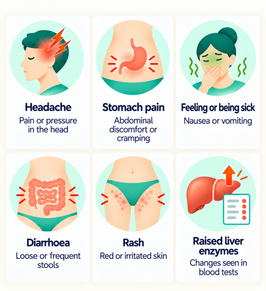
- Headache - rest and plenty of fluids can help
- Stomach pain - smaller, slower meals may ease it
- Feeling or being sick - taking the capsule after a snack can help
- Diarrhoea - drink plenty of fluids to stay hydrated
- Rash - speak to a doctor if it gets worse or doesn't go away
- Raised liver enzymes - this shows up on blood tests rather than as symptoms
Uncommon side effects affect up to 1 in 100 people. These include dizziness, trouble sleeping, drowsiness, changes in taste, indigestion and tiredness.3
Speak to a doctor if a headache lasts longer than a week or is severe, or if any side effect is still bothering you.10
Serious side effects
Serious side effects are uncommon.10 Contact a doctor or call 111 straightaway if you notice:
- Yellowing of your skin or the whites of your eyes, pale poo or dark pee (possible signs of liver problems)
- Bruising more easily or getting infections more easily
- A fast or irregular heartbeat
Serious allergic reactions (anaphylaxis) are rare but need emergency treatment. Call 999 if your lips, mouth, throat or tongue suddenly swell, you're struggling to breathe, or you develop a severe skin reaction.10
Swelling of the face or throat, or difficulty breathing, after taking fluconazole is an emergency. Call 999 straightaway.
You can report any suspected side effect through the MHRA Yellow Card scheme. A full list of side effects is in the patient information leaflet that comes with your medicine.
Can you take fluconazole with alcohol and other medicines?
Good news for everyday life: you can drink alcohol while taking fluconazole.8 There's also no food or drink you need to avoid.
Fluconazole isn't likely to affect your contraception. That includes the combined pill, the mini pill and emergency contraception.8 The exception is if it makes you sick, or gives you severe diarrhoea for more than 24 hours. In that case, your pill may not protect you, so check the advice on your pill packet.
Fluconazole can interact with a number of other medicines.3 Examples include:
- Warfarin and similar blood thinners
- Some statins, such as atorvastatin and simvastatin
- Some antidepressants, such as amitriptyline and nortriptyline
- Some sleeping or anxiety medicines (benzodiazepines such as midazolam)
- Some diabetes medicines, such as glipizide and glibenclamide
- Medicines that affect your heart rhythm
Fluconazole can change how some common medicines work for several days after one dose. Tell your pharmacist about everything you take, including supplements.
Who should check with a doctor before taking fluconazole?
Fluconazole is suitable for most adults with thrush. But some people should speak to a GP before treating it themselves.1 See a GP first if:
- It's your first time having thrush symptoms
- You're under 16 or over 60
- Thrush keeps coming back (more than four times in 12 months)
- Treatment for thrush hasn't worked
- You're pregnant or breastfeeding
- You have a weakened immune system, for example because of diabetes, HIV or chemotherapy
It's also important to tell a pharmacist or doctor if you have liver or kidney problems, a heart rhythm condition, or have ever reacted to an antifungal medicine.3
Fluconazole in pregnancy
Fluconazole isn't usually used for thrush during pregnancy. A GP will normally suggest a clotrimazole pessary or cream first.11 Fluconazole may occasionally be prescribed in pregnancy, but only if other treatments haven't worked and after a discussion about the risks and benefits.
Do not take a thrush tablet if you are pregnant or think you might be without speaking to a GP or midwife first.
Fluconazole while breastfeeding
You can usually take fluconazole while breastfeeding, as long as your doctor or health visitor says your baby is healthy.11 It does pass into breast milk, but it's been used for many years without problems in breastfed babies. Speak to your midwife, health visitor or doctor if your baby isn't feeding well or has an upset stomach.
Fluconazole for men
Men can take fluconazole too. A single 150mg dose is used to treat thrush on the penis (balanitis).4 As with vaginal thrush, symptoms should be better within 7 days.8 If you have symptoms for the first time, it's worth seeing a GP or sexual health clinic to rule out other infections.
Tips for a faster recovery
Fluconazole treats the underlying infection. But a few practical changes can ease symptoms while you recover and lower the chance of it coming back.
Skip scented soaps, shower gels and bubble baths. They can disrupt the natural pH balance and make irritation worse. Wash with warm water and a non-fragranced emollient instead, and dry the area properly afterwards.1
Avoid douches and vaginal deodorants. These can upset the natural balance of bacteria that keeps yeast under control.
Wear loose-fitting cotton underwear. Tight or synthetic fabrics, including tights, create a warm, moist environment where yeast thrives.
Small swaps make a real difference. Cotton underwear and plain water are two of the easiest ways to stop thrush returning.
Hold off on sex until the infection has fully cleared, especially if it's uncomfortable. Thrush isn't an STI, but sex can aggravate your symptoms during recovery. If you're also using an antifungal cream or pessary, bear in mind these can damage condoms and diaphragms.1
Your partner doesn't need treatment unless they have symptoms too.1
If you're prone to thrush and you've been prescribed antibiotics, ask your pharmacist about preventive options. Antibiotics are one of the most common triggers. They reduce the Lactobacillus bacteria that help keep Candida in check.
Fluconazole vs topical treatments
Fluconazole isn't the only option for thrush. Topical antifungals such as clotrimazole come as pessaries, internal creams and external creams.
Oral and vaginal antifungals work equally well for uncomplicated vaginal thrush.6 The choice often comes down to personal preference.
The main advantage of fluconazole is convenience. One capsule treats the infection throughout your body, with nothing to insert or apply. Topical treatments, on the other hand, can bring quicker relief from external itching and soreness.
That's why some people combine the two. Using a clotrimazole external cream, like Canesten 2% External Cream, alongside oral fluconazole can soothe external irritation while the capsule tackles the infection. Combination packs, such as Canesten Thrush Duo, contain both.4
You don't have to choose. A capsule clears the infection while an external cream soothes the itch in the meantime.
Topical treatment is also the usual first choice in pregnancy, when oral fluconazole is generally avoided.11
For oral thrush, the options are different. Miconazole oral gel (Daktarin) is the most commonly used topical treatment. Fluconazole is used as an oral alternative when a gel isn't enough.
When thrush keeps coming back
Recurrent thrush affects a significant number of women. It's defined as four or more episodes in 12 months.6
If that sounds like you, see your GP for an assessment. They may take a swab to confirm the diagnosis and identify the specific Candida species. This matters because some species, such as Candida glabrata, don't respond as well to fluconazole.9
Treatment usually involves an initial course to clear the active infection, followed by a weekly maintenance dose of fluconazole for six months.7 A GP can also help you spot what's triggering it, such as your period, sex, antibiotics or blood sugar levels.1
Frequent thrush is common and manageable. A swab and a proper plan usually work better than buying treatment again and again.
When to see a GP or pharmacist
Sometimes thrush needs a professional opinion before or after treatment.1 Speak to a GP or pharmacist if:
- You're having thrush symptoms for the first time
- Your symptoms are severe
- You're pregnant or breastfeeding
- Your symptoms haven't improved 7 days after taking fluconazole
- Your symptoms get worse at any point
- You've had thrush more than four times in 12 months
- You have unusual symptoms, such as smelly or coloured discharge, sores, blisters or pain in your lower tummy
This lets a professional confirm the diagnosis and check that fluconazole is suitable for you.
Unusual discharge, sores or tummy pain point to something other than thrush. Get checked rather than reaching for another thrush treatment.
Frequently asked questions
Is Canesten Oral Capsule the same as fluconazole?
Yes. Canesten Thrush Oral Capsule contains 150mg of fluconazole, the same active ingredient and dose as a standard fluconazole thrush capsule. It’s a single-dose treatment sold in pharmacies for adults aged 16 to 60. The main differences are the brand name and packaging, so it works in the same way and over the same timeframe.
Can you take a thrush tablet when pregnant?
Fluconazole isn’t usually recommended during pregnancy. A GP will normally suggest a clotrimazole pessary or cream first instead. Oral fluconazole may occasionally be prescribed if other treatments haven’t worked, but only after a GP has talked through the risks and benefits with you. Speak to a GP or midwife before treating thrush if you’re pregnant.
How long do fluconazole side effects last?
Most fluconazole side effects, like a headache, nausea or an upset stomach, are mild and short-lived. Because thrush is usually treated with a single dose, they tend to ease as the medicine leaves your system. Speak to a doctor if a headache lasts longer than a week, or if any side effect is severe or still bothering you.
Can I take a second thrush tablet?
You should not take a second capsule just because your symptoms haven’t cleared in a day or two. A single dose keeps working for several days. If your symptoms haven’t improved after 7 days, speak to a doctor rather than repeating the dose. Avoid using thrush treatment more than twice in six months without speaking to a pharmacist or doctor.
Can men take a thrush tablet?
Yes. A single 150mg dose of fluconazole is used to treat thrush on the penis, also called balanitis. Symptoms include redness, irritation and a white discharge under the foreskin. If it’s your first time having these symptoms, see a GP or sexual health clinic first, as other infections can look similar. Symptoms should improve within 7 days.
Can you use a thrush tablet and cream together?
Yes. Many people use a clotrimazole external cream alongside a fluconazole capsule. The capsule treats the infection from the inside, while the cream soothes itching and soreness on the outside as it clears. Some pharmacy packs, like Canesten Thrush Duo, include both. Bear in mind that antifungal creams can damage condoms and diaphragms.
References
- NHS. Thrush in men and women. NHS website; 2023. nhs.uk
- Sobel JD. Vulvovaginal candidosis. The Lancet. 2007;369(9577):1961-1971. doi:10.1016/S0140-6736(07)60917-9
- Ranbaxy (UK) Limited. Fluconazole 150 mg Capsules: Summary of Product Characteristics. Electronic Medicines Compendium; 2024. medicines.org.uk/emc
- NHS. How and when to take fluconazole. NHS website; 2023. nhs.uk
- Bayer plc. Canesten Thrush Oral Capsule 150mg capsule: Patient Information Leaflet. Electronic Medicines Compendium; 2024. medicines.org.uk/emc
- Saxon C, Edwards A, Rautemaa-Richardson R, et al. British Association for Sexual Health and HIV national guideline for the management of vulvovaginal candidiasis (2019). International Journal of STD & AIDS. 2020;31(12):1124-1144. doi:10.1177/0956462420943034
- National Institute for Health and Care Excellence. Fluconazole. British National Formulary; 2026. bnf.nice.org.uk
- NHS. Common questions about fluconazole. NHS website; 2023. nhs.uk
- Pappas PG, Kauffman CA, Andes DR, et al. Clinical Practice Guideline for the Management of Candidiasis: 2016 Update by the Infectious Diseases Society of America. Clinical Infectious Diseases. 2016;62(4):e1-e50. doi:10.1093/cid/civ933
- NHS. Side effects of fluconazole. NHS website; 2023. nhs.uk
- NHS. Pregnancy, breastfeeding and fertility while taking fluconazole. NHS website; 2023. nhs.uk
This article is intended for informational purposes only and does not replace professional medical advice. Always read the patient information leaflet supplied with your medication and speak to a healthcare professional if you have specific concerns.